Dinosaur Valley State Park – September 2026
We made a quick trip on a Saturday morning to visit Dinosaur Valley at the recommendation of one of my co-workers. It is about an hour and a half from our place in Arlington to the state park, so the drive isn’t terrible. When we went it had been more than two months since we had any rain which meant that it would be a good time to see the tracks in the riverbed at the State Park.
Visiting Dinosaur Valley State Park makes prehistoric life feel unusually close. Along the bed of the Paluxy River, tracks made by dinosaurs more than 100 million years ago are preserved in the limestone, and when the water is low (like during the summer of 2026) you can walk right beside them.
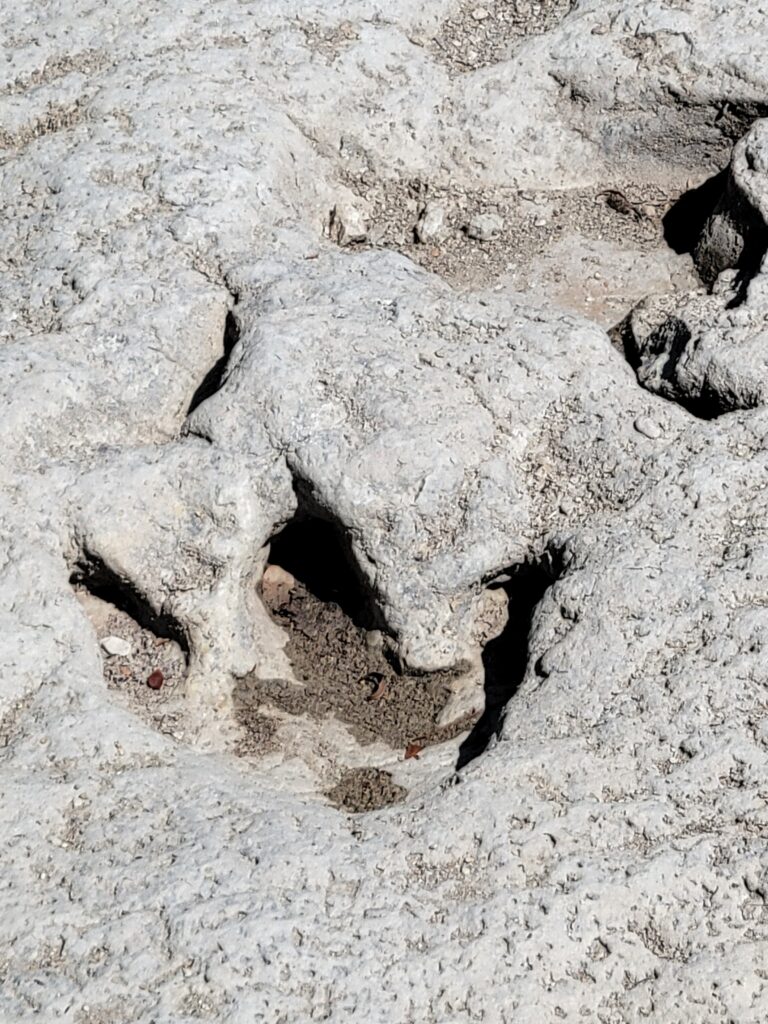
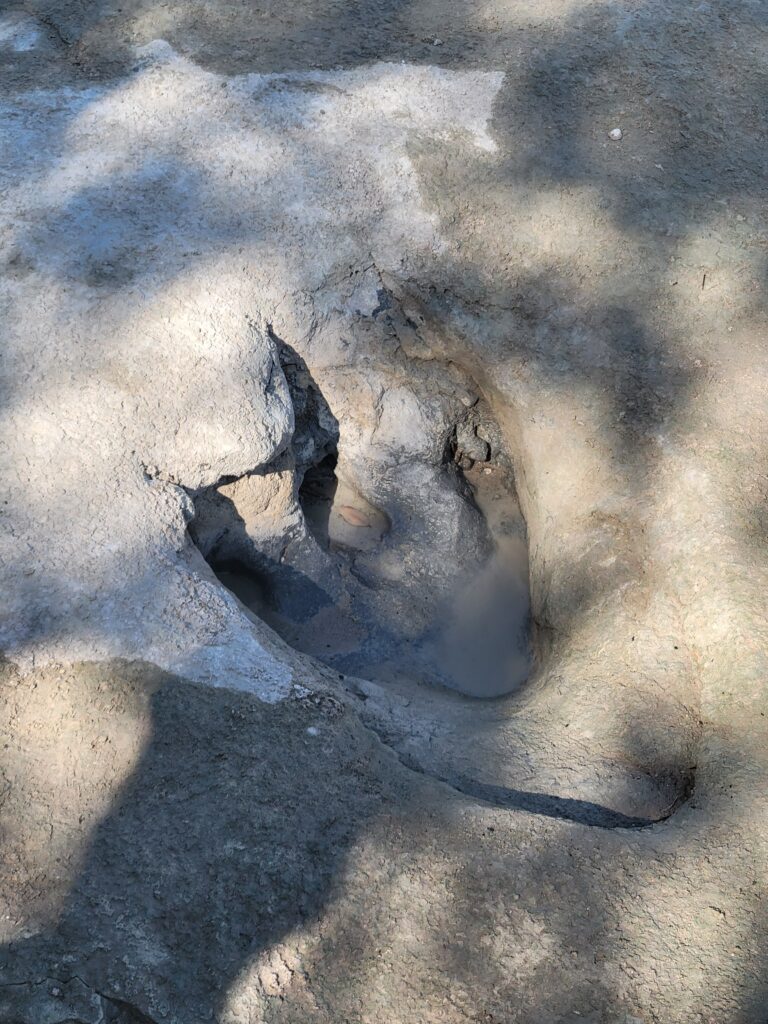
The park is best known for two very different kinds of footprints. Large three-toed tracks were left by Acrocanthosaurus, a powerful meat-eating dinosaur, while the enormous rounded tracks belong to Sauroposeidon, one of the giant long-necked sauropods that lived in this part of Texas during the Early Cretaceous.
What makes the park especially memorable is that the tracks are still part of the natural landscape. They are not behind glass or confined to a museum display. They sit in the riverbed, exposed to sun, water, mud, and erosion much as the original footprints once were. Seeing them in place makes it much easier to imagine these animals actually moving through the area rather than thinking of them only as fossils.
Acrocanthosaurus

Acrocanthosaurus—whose name means “high-spined lizard”—was one of the largest predators in North America during the Early Cretaceous, roughly 110–125 million years ago. Reaching about 38–40 feet long and weighing an estimated 5–7 metric tons, it was a massive theropod built to hunt large prey. Its most distinctive feature was the row of unusually tall spines along its back, which likely supported a muscular ridge or low sail. Fossils have been found across parts of the United States, including Texas, Oklahoma, and Wyoming, and it is the most likely maker of the large three-toed predator tracks at Dinosaur Valley State Park.
Sauroposeidon proteles

Sauroposeidon proteles was an enormous long-necked sauropod that lived in North America during the Early Cretaceous, roughly 110–125 million years ago. It was among the tallest land animals ever known, with an exceptionally long neck that allowed it to browse vegetation far above the reach of most other dinosaurs. Its first fossils were discovered in Oklahoma in 1994 and were so large that they were initially mistaken for petrified tree trunks. Sauroposeidon is also recognized as the official state dinosaur of Texas and is the most likely maker of the giant sauropod tracks preserved at Dinosaur Valley State Park.
The Dinosaur Tracks:

Acrocanthosaurus

Sauroposeidon proteles
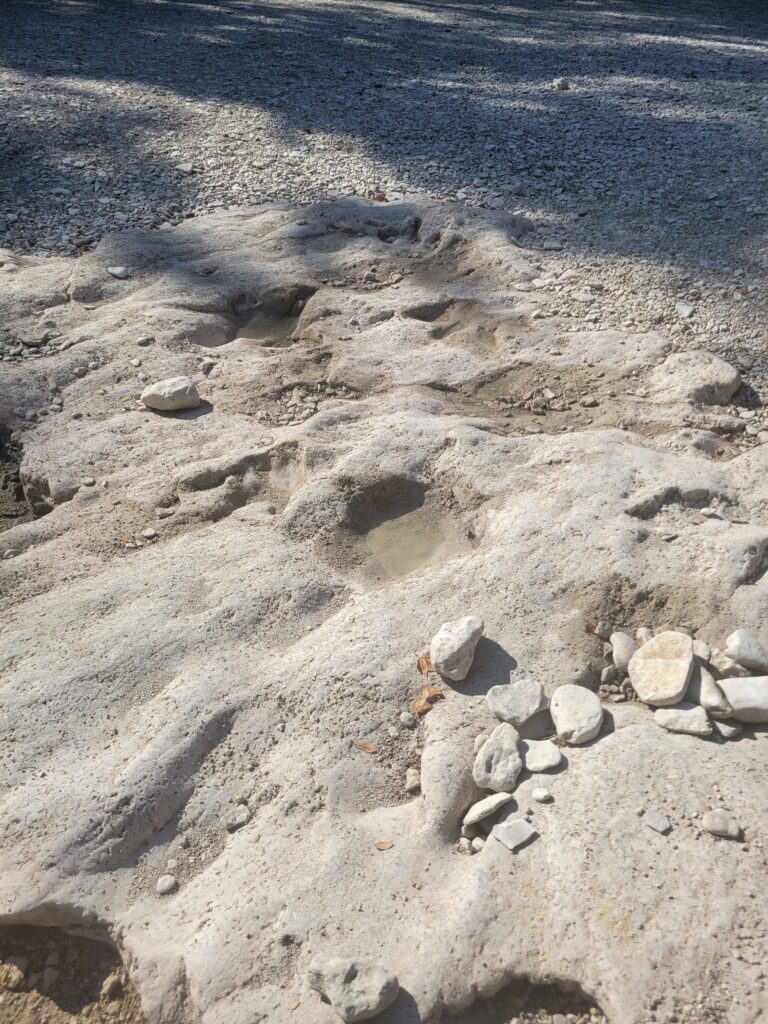
Mixed tracks
The tracks were formed approximately 113 million years ago during the Early Cretaceous period, when the area was a muddy shoreline near an ancient shallow sea. A major flood in 1908 likely exposed some of the tracks, and in 1909 nine-year-old George Adams discovered large three-toed footprints in the riverbed. In 1937, fossil collector R. T. Bird documented the sauropod tracks that made the site scientifically famous.
Paluxy River

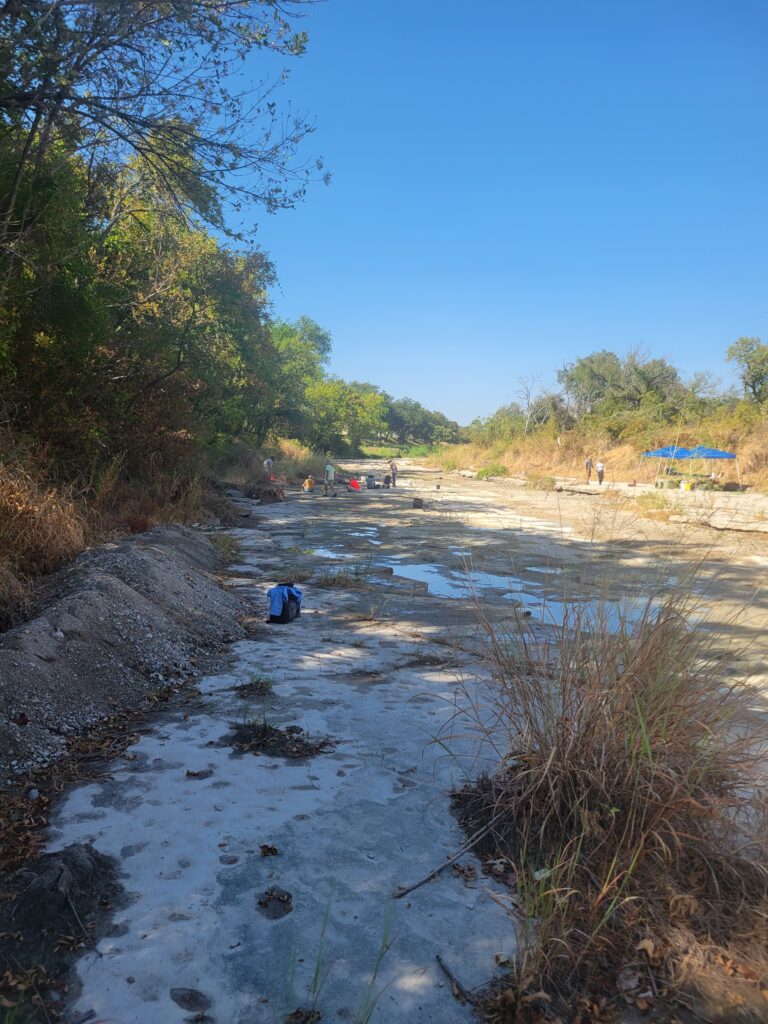
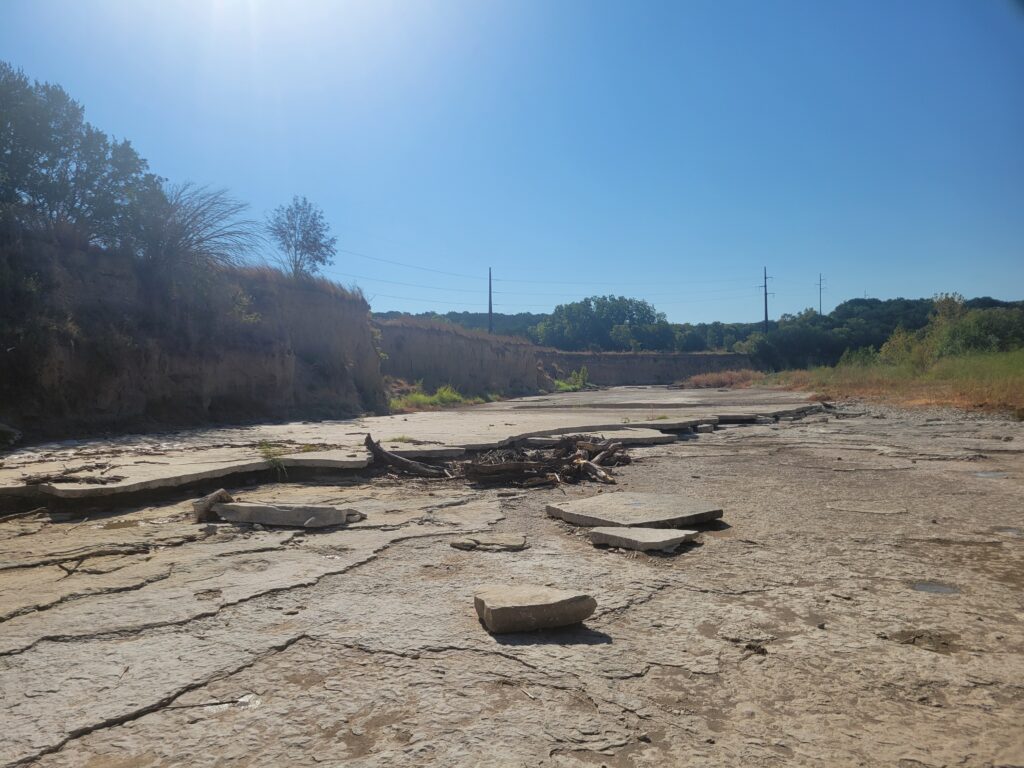
The footprints are typically located in the limestone riverbed, and their visibility depends heavily on river water levels and weather conditions. Severe droughts occasionally expose deep prints that are normally hidden underwater or under sandbars. In summers like 2026, the river is almost completely dry, making it a great time to visit the park and see the most tracks.
Visiting the Park
The main portion of the park is located in a horseshoe bend in the river. There are about five main clusters of tracks in the riverbed.
If your goal is primarily to see the dinosaur tracks, the longest walk we considered was roughly two miles round trip to reach some of the more distant track areas. It’s summer in Texas, so it is hot (bring water).
We took our small dog and he enjoyed a lot of the trip, but I did carry him over some rough portions and when he seemed to be getting hot and worn out.
Most of the other concentrations of tracks are much closer to parking and the hikes may be a little steep getting down to the riverbed, but they aren’t too strenuous.
I think that in wetter seasons the experience is a lot different. The park website shows pictures of people in kayaks in the same places where we were hiking in the riverbed.

Cheese for scale!
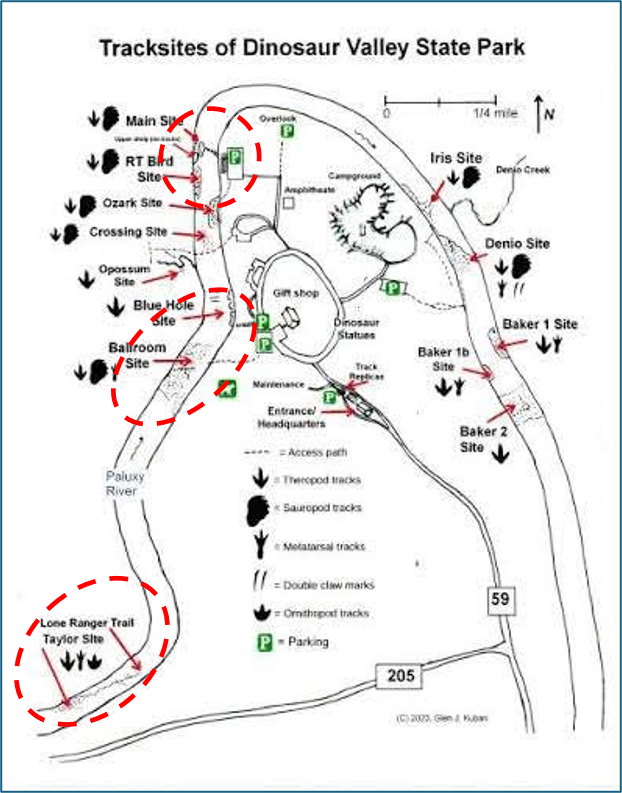
Where we saw tracks:
The Main Site: This is the historic location where paleontologist Roland T. Bird discovered the world’s first documented sauropod trackways in 1938, proving that giant long-necked dinosaurs walked on all fours.
Blue Hole: spring-fed swimming hole with three-toed dinosaur tracks are visible on the limestone ledge.
Ballroom Site: Called the “Ballroom” because footprints point in multiple, overlapping directions, making the limestone riverbed look like an ancient dance floor where dinosaurs crossed paths. Features large sauropod (plant-eating) tracks—some measuring roughly 36 inches long—alongside smaller juvenile sauropod and sharp three-toed theropod tracks.
Lone Ranger Trail: Roughly a 2-mile round-trip hike from the park’s access points. Features long trails of robust, deep three-toed theropod (Acrocanthosaurus) footprints. This site contains some of the most continuous and distinct dinosaur trackways recorded in the USA. The day we visited a paleontologist and a group of volunteers were cleaning out and documenting the long (over 100′) trail of tracks.
The Dinosaur Models
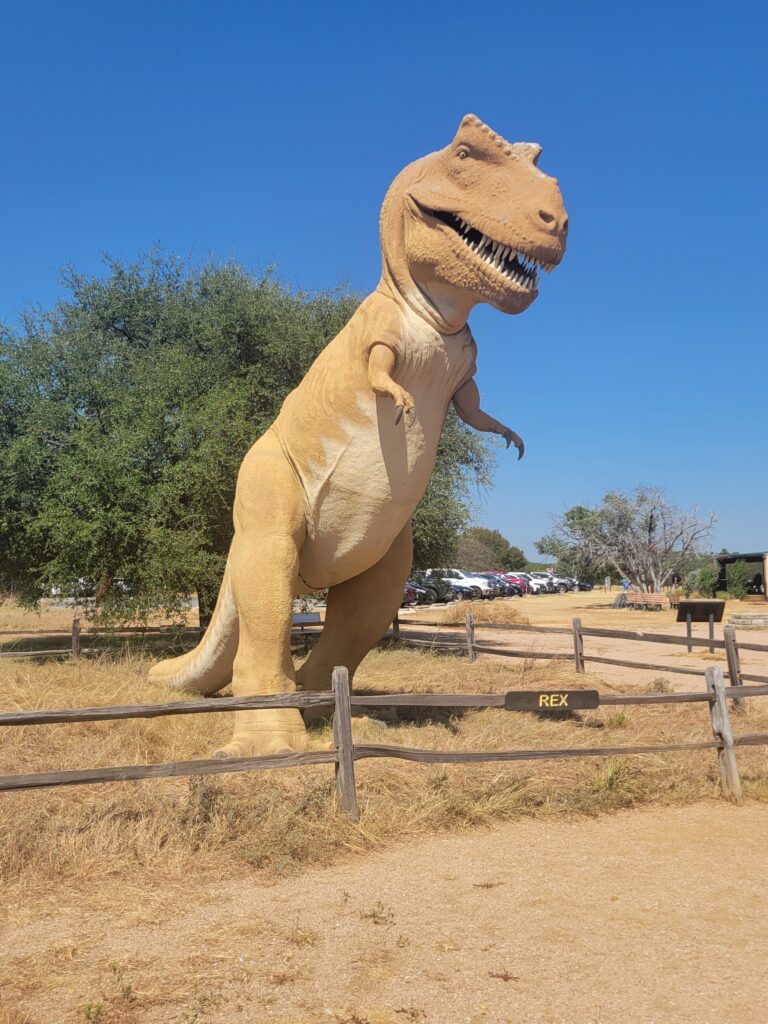
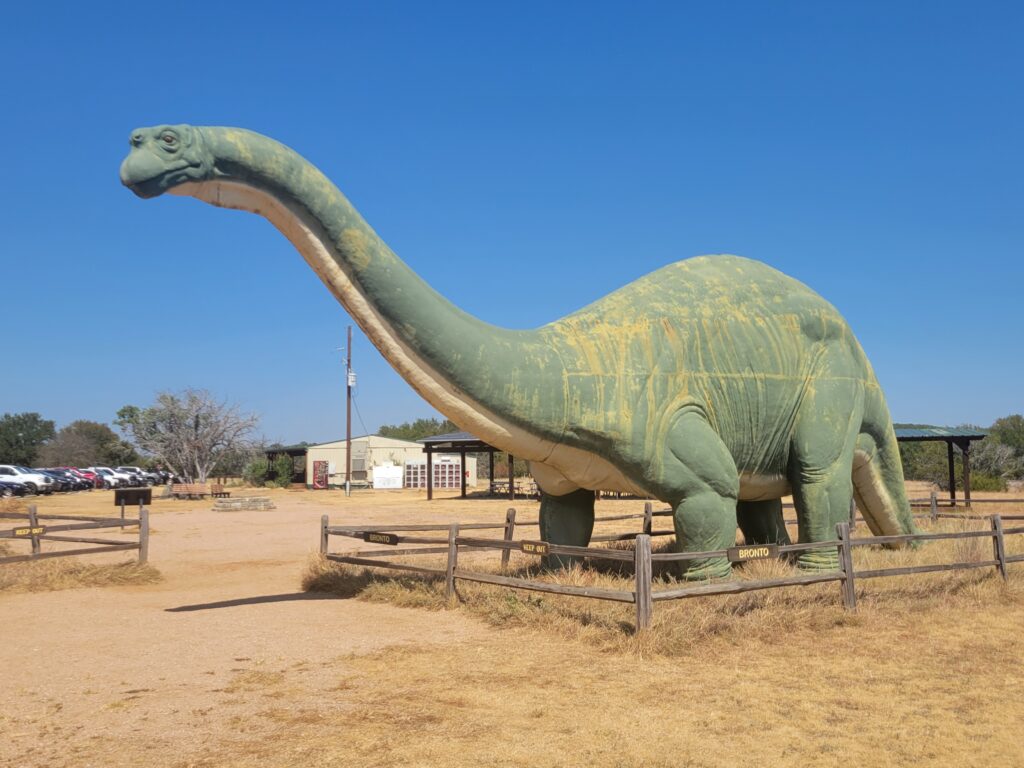
The two enormous fiberglass dinosaurs near the park headquarters have almost become attractions in their own right. The Tyrannosaurus rex and Brontosaurus were originally part of Sinclair Oil’s famous nine-dinosaur exhibit at the 1964 New York World’s Fair before touring the country and eventually finding a permanent home at Dinosaur Valley. Their scientific accuracy reflects the era in which they were built—which is part of their charm—and they have now been welcoming visitors to the park for more than half a century.