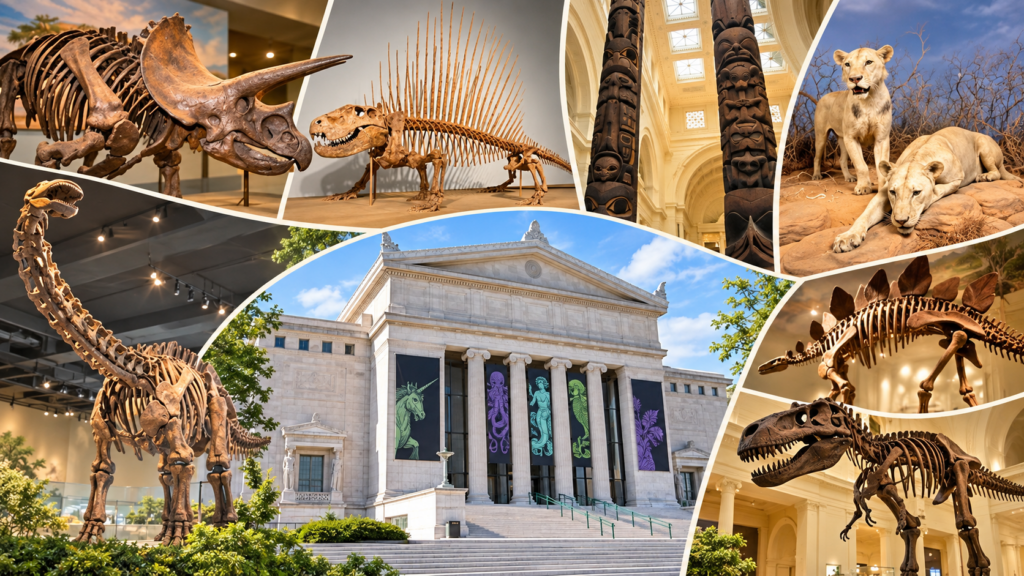
The Field Museum
Chicago, IL
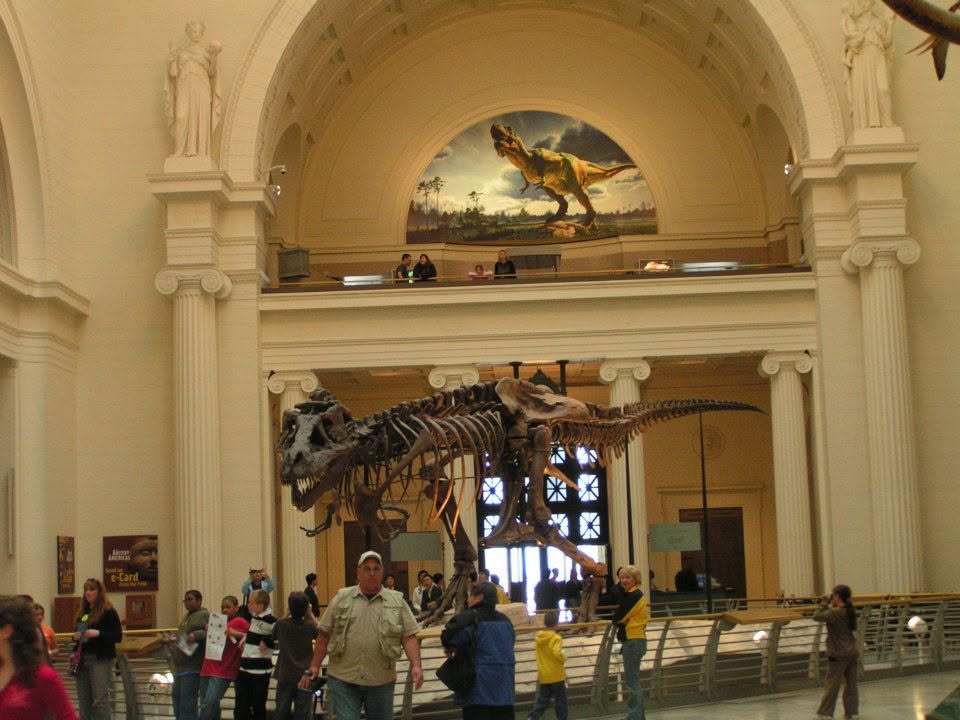
The Field Museum is one of Chicago’s great natural-history museums, with collections spanning dinosaurs, anthropology, geology, and wildlife. On this visit, SUE the T. rex was still displayed in Stanley Field Hall and was the main reason Desiree and I took the trip up to Chicago.

SUE the T. rex
The centerpiece of the Field Museum for many years, SUE is one of the most complete Tyrannosaurus rex skeletons ever found. Discovered in South Dakota in 1990, the roughly 40-foot-long fossil is about 90 percent complete and has become one of Chicago’s most recognizable museum specimens. These photos show SUE in the museum’s former Stanley Field Hall display, where the skeleton stood from 2000 until its move to a dedicated gallery in 2018.
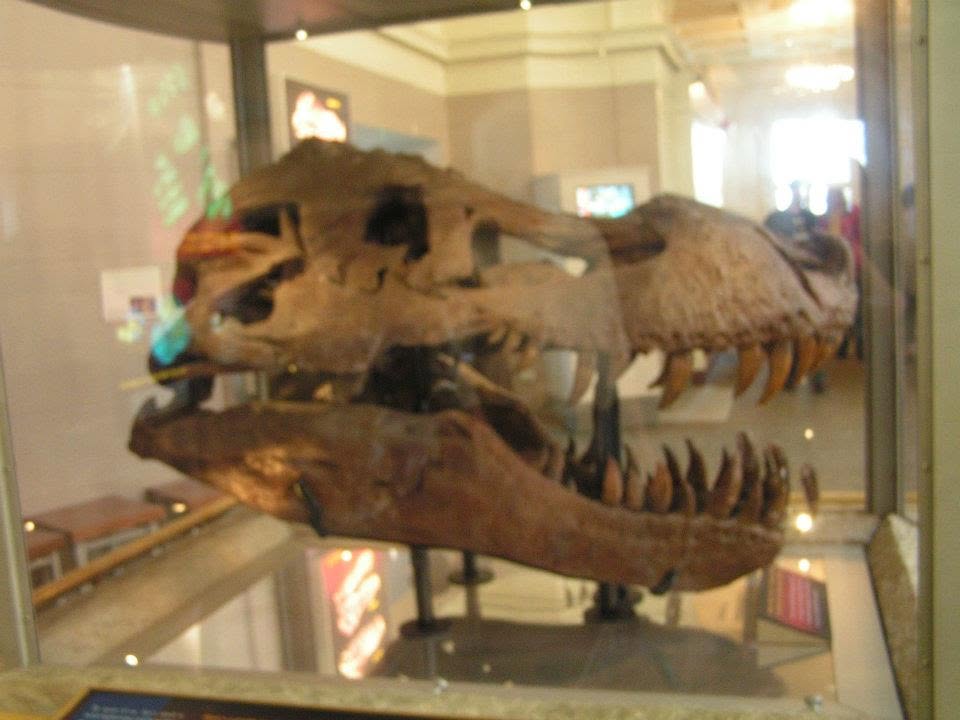
SUE’s Original Skull
SUE’s massive fossil skull was displayed separately from the mounted skeleton because its weight made it impractical to place on the reconstructed body. The skeleton on display used a lightweight replica, while the original skull gave visitors a close look at the powerful jaws and teeth of Tyrannosaurus rex.

Dimetrodon
Often mistaken for a dinosaur, Dimetrodon actually lived tens of millions of years before the first dinosaurs appeared. It was an early synapsid, making it more closely related to mammals than to reptiles such as dinosaurs. Its tall dorsal sail is its most distinctive feature, although scientists still debate exactly how that structure was used.
I still claim this as my favorite dinosaur, no matter what people say……

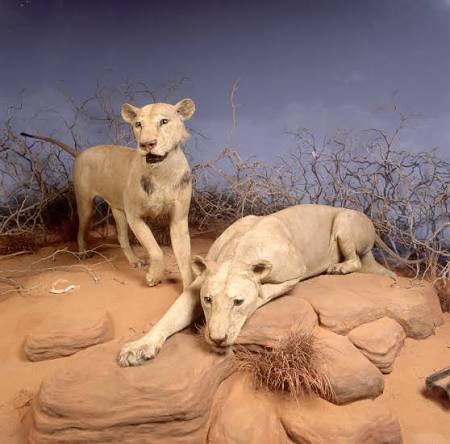
The Man-Eating Lions of Tsavo
In 1898, two maneless male lions repeatedly attacked workers building a railway bridge across Kenya’s Tsavo River, eventually bringing construction to a halt. Lt. Col. John Henry Patterson killed both lions later that year and eventually sold their hides to the Field Museum, where they were reconstructed as the taxidermy mounts displayed today. Patterson claimed the lions killed 135 people, but later Field Museum research estimated that they consumed roughly 35 people. Studies of their teeth and skulls have also suggested that severe dental problems may have helped push the lions toward easier human prey.
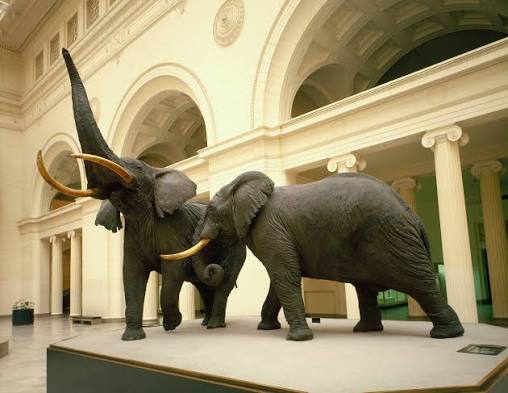
Carl Akeley’s Fighting African Elephants
Created by pioneering taxidermist Carl Akeley, these two African elephants were collected during a 1905 expedition to Kenya and mounted in a dramatic confrontation. Unveiled in 1909, the display became one of the Field Museum’s most iconic exhibits and an important example of Akeley’s revolutionary approach to realistic museum taxidermy.